
As an Amazon Associate I earn from qualifying purchases.
You can make your Christmas tree safer for your dog by anchoring it, limiting access, and keeping tempting or breakable decorations out of reach. A stable setup helps protect your dog from falling branches, swallowed decorations, and cords that invite chewing.
For large, tall, or enthusiastic dogs, the lower three feet deserve extra attention. A sweeping tail or curious nose can knock ornaments down, so keep that area clear of hazards.
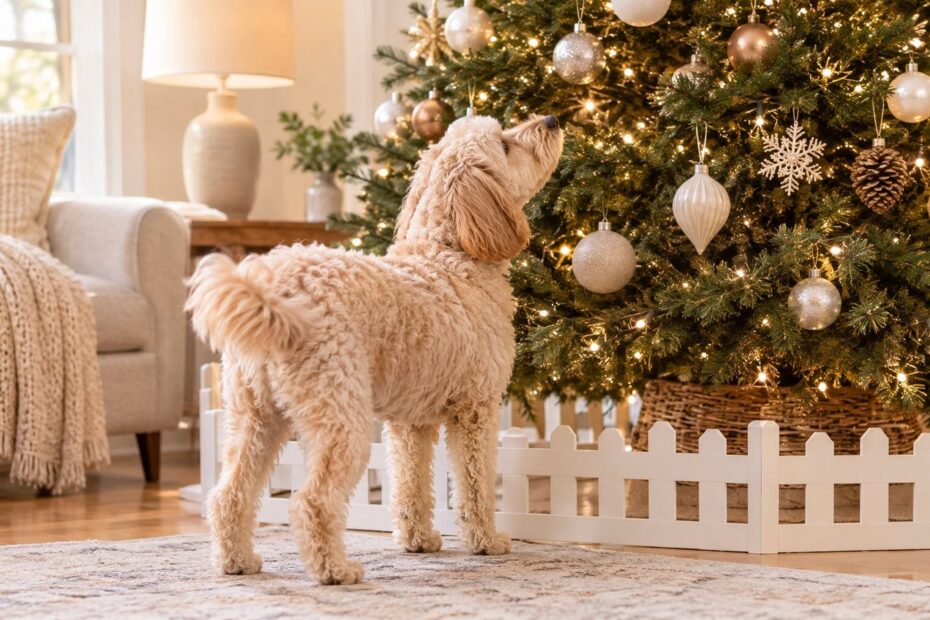
For most dogs, an exercise pen or tree fence around the base is the simplest single fix.
Two barrier options to consider:

Amazon Basics Foldable Metal Exercise Pen: eight connected 24-by-30-inch metal panels that fold flat and can be shaped into a circle or square around the tree base. The 30-inch height suits small to medium dogs, so check your dog’s height and jumping habits.

Bonnlo 5-Panel Configurable Gate: steel panels about 29 inches tall that cover up to roughly 120 inches wide, with a walk-through door and wall mounts. The maker lists it for use around Christmas trees, and the vertical slats are designed to discourage climbing.
Where Should You Place and Anchor the Tree?
Place your tree where your dog has less reason and room to bump into it, then secure it so a nudge cannot topple it. A heavy stand and a wall anchor add stability, especially in busy rooms.
1. Choose a Stable Spot and Weighted Stand
Set the tree on a level surface away from doorways, high-traffic paths, and furniture your dog can use as a launch point. Choose a weighted stand sized for the tree, and check that the trunk sits firmly upright before you decorate.
Give the tree room around its branches so your dog’s body and tail are less likely to brush against ornaments. If you have a large dog, consider a smaller tree that is easier to stabilize and keep out of reach.
2. Tie the Tree to a Wall Hook
For added security, fasten the tree trunk to a wall hook installed in a stud. Use sturdy cord or line, keep the tie point high enough to prevent tipping, and position the material where your dog cannot chew or become tangled in it.
Check the anchor after decorating and whenever you move the tree. A tie that looks secure can loosen as branches settle or the stand shifts.
How Can You Keep Your Dog Away From the Tree?
A physical barrier creates a clear boundary, while supervision and reward-based practice help your dog learn what to do near the tree. Use both when your dog is curious, energetic, or still learning household rules.
3. Use an Exercise Pen or Baby Gate
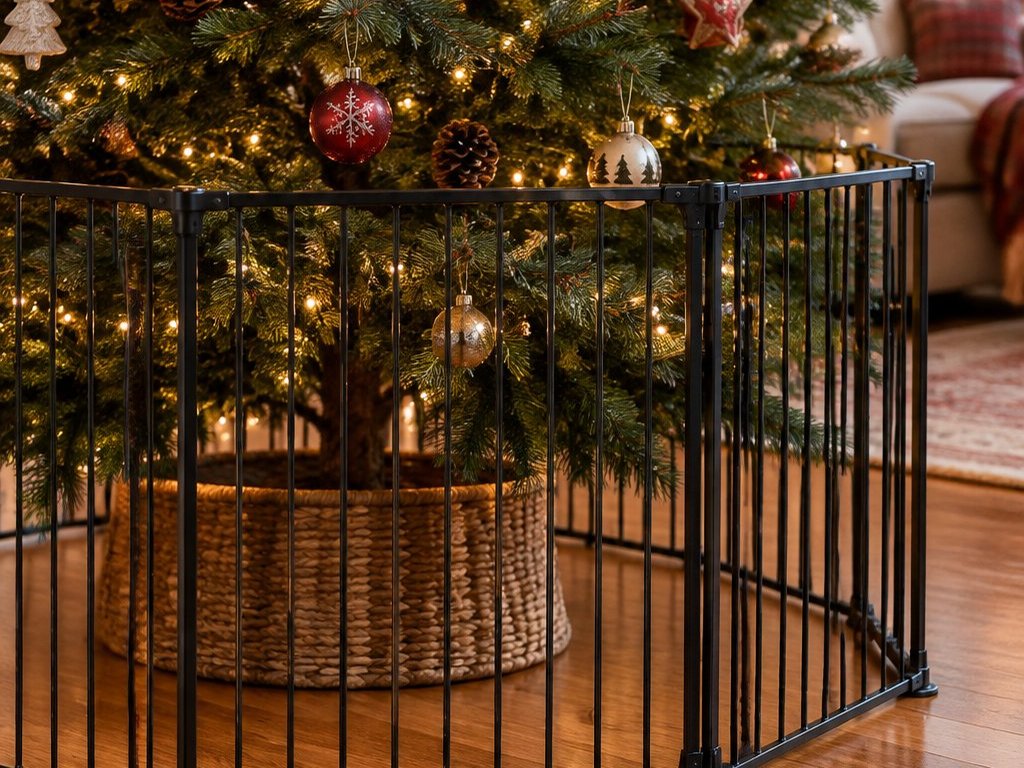
Place an exercise pen or a secure baby gate around the tree, leaving enough space for branches and ornaments to stay beyond your dog’s reach. Check that the barrier cannot slide, tip, or leave a gap your dog can squeeze through. The two barrier options listed near the top of this guide are a good starting point.
Choose a barrier tall and sturdy enough for your dog. A determined jumper or chewer may need a different setup, such as keeping the tree in a room your dog cannot enter when you are away.
4. Supervise and Practice “Leave It”
Stay nearby when your dog has access to the tree, especially while the decorations are new. Practice “leave it” with a treat or toy away from the tree first, then reward your dog for turning away from branches and settling nearby.
Keep sessions short and calm. If your dog reaches toward the tree, guide them away and reward a safer choice; avoid turning the decorations into a game of chase.
Which Decorations and Lights Are Safe?
Choose sturdy decorations, keep tempting items beyond reach, and secure every electrical cord. Glass, small parts, dangling hooks, and chewable wiring can create hazards if your dog mouths or knocks them down.
5. Keep the Lower Three Feet Clear of Hazards
Treat the lower three feet of the tree as the danger zone, especially with a big dog or a tail that sweeps across branches. Keep glass ornaments, tinsel, metal hooks, edible ornaments, and decorations with small detachable parts off the lower branches.
Use shatter-resistant ornaments higher up and attach them firmly to branches. Avoid placing food-themed decorations where your dog can smell or reach them, and pick up any ornament or hook that falls.
6. Secure Light Cords and Cover the Water Reservoir
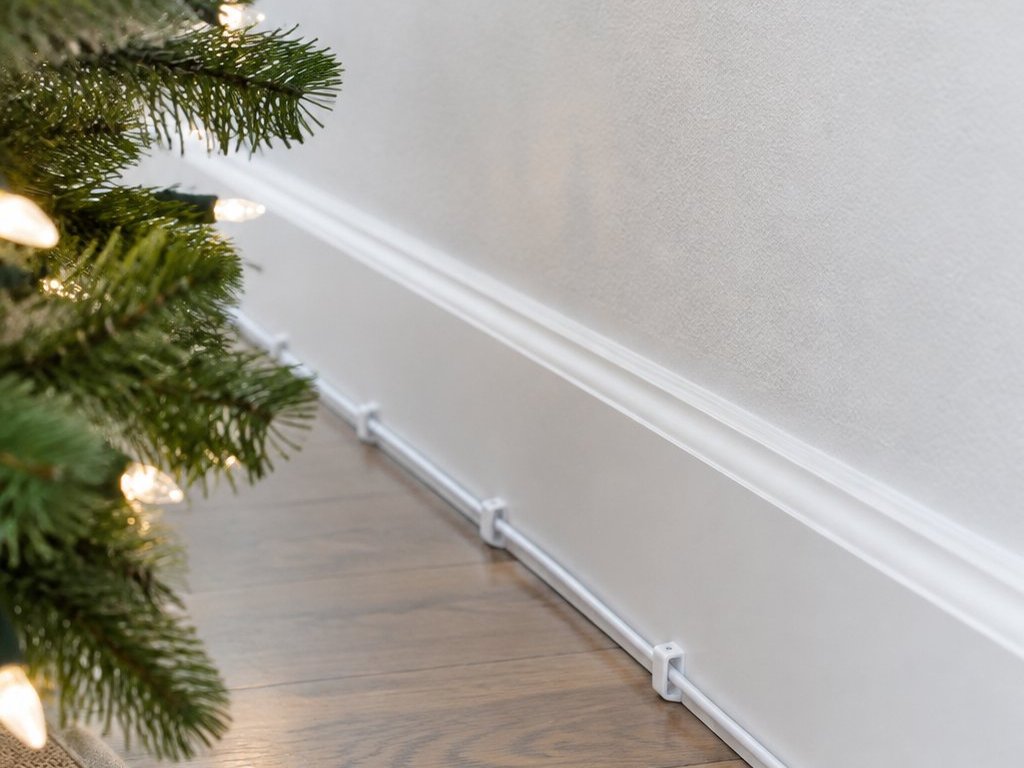
Route light cords behind furniture or along a wall, then secure them with cord covers or clips so they do not dangle within chewing range. Inspect the wiring for damage, and unplug the lights when you cannot supervise your dog or when you leave home.
Cover the tree-water reservoir with a secure barrier that your dog cannot lift or chew. Keep any additives out of reach, and prevent your dog from drinking from the stand.
Are Real or Artificial Trees Safer for Dogs?
Both real and artificial trees need precautions, since needles, decorations, and tree water can attract a curious dog. Your choice of tree does not replace cleanup, supervision, or keeping the stand inaccessible.
7. Clean Up Dropped Needles
Sweep or vacuum fallen needles regularly, and check beneath the tree after your dog has been nearby. Needles from real trees can irritate a dog’s mouth or stomach if chewed or swallowed; artificial needles can also pose a risk if your dog bites pieces off.
Inspect the base and nearby floor each day while the tree is up. If you see your dog chewing needles or notice signs of illness, contact your veterinarian for advice.
8. Keep Tree-Water Preservatives and Fertilizer Out of Reach
Keep your dog away from the tree stand water, particularly if you have added a preservative or fertilizer. Cover the reservoir securely and follow the product label for handling and storage.
If your dog drinks treated water, contact your veterinarian or the ASPCA Animal Poison Control Center for guidance. Keep the product packaging available so you can share its ingredients.
A Safer Tree Starts With a Few Simple Precautions
A stable tree, a barrier, and dog-safe decorating choices reduce the chances of a holiday mishap. Keep the lower branches clear, secure cords and water, and supervise your dog around the tree.
If your dog swallows an ornament, hook, tinsel, or another concerning item, call your veterinarian or the ASPCA Animal Poison Control Center promptly. Keep an eye on your dog and share what was swallowed, when it happened, and any packaging or product details you have.
For other holiday ideas, browse these Christmas dog stocking stuffer ideas and dog Christmas photo ideas.
Frequently Asked Questions
How do I protect my Christmas tree from my dog?
Anchor the tree in a weighted stand, add a wall tie, and place a sturdy pen or gate around it. Keep fragile or edible decorations off low branches, secure light cords, and cover the tree-water reservoir.
What type of Christmas tree is safe for dogs?
Real and artificial trees both need supervision and careful setup around dogs. With either type, keep needles and decorations out of reach, clean up fallen pieces, and block access to the stand water.
How can I stop my dog from attacking the Christmas tree?
Use a barrier to prevent access while you supervise and reward calm behavior near the tree. Practice “leave it” away from the decorations first, then reinforce it when your dog turns away from branches or ornaments.
Are Christmas tree lights safe around dogs?
Lights are safer when cords are secured, kept out of chewing range, and checked for damage. Unplug them when you are away or unable to supervise your dog.
What should I do if my dog eats something from the tree?
Call your veterinarian or the ASPCA Animal Poison Control Center if your dog swallows a decoration, tinsel, a hook, treated tree water, or another concerning item. Tell them what your dog ate, how much, and when, and keep any packaging nearby.
Pin It for Later